

In an open access article for Journal of Health and Social Behavior, Leafia Ye explores the erosion in health advantage that many immigrants to the U.S. experience as they age. She challenges the popular notion that acculturation (the process through which immigrants adapt to their surrounding context) is the primary culprit driving this loss of health advantage. Instead, Ye introduces a theory that “acculturative discordance” — the gaps between various dimensions of acculturation, as well as the fact that adapting to U.S. culture often does not protect racialized immigrants from structural exclusion — is connected to long-term stress and disability.
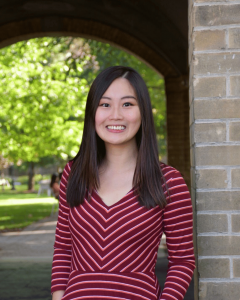
Dr. Leafia Ye is an Assistant Professor in the Department of Sociology at the University of Toronto.
Citation
Ye, L. (2026). Is Acculturation the Culprit? Acculturative Discordance and Immigrants’ Later-Life Health. Journal of Health and Social Behavior. https://doi.org/10.1177/00221465261450447
Abstract
Immigrants have similar or higher disability levels than the U.S.-born in later life, which is puzzling given they have a health advantage upon arrival. A popular explanation is that acculturation harms health, but existing evidence is mixed. This study constructs multidimensional acculturation measures (linguistic, residential, marital, civic) using the American Community Survey (N = 958,211) and examines their associations with disability. I find that immigrants indeed lose their health advantage over the U.S.-born between ages 65 and 80, but most acculturation measures predict lower rather than higher disability. Instead, I propose and find evidence for a theory of acculturative discordance, where (1) net of demographic and socioeconomic characteristics, immigrants who are acculturated on some dimensions but not acculturated on others have poorer health and (2) minoritized immigrants experience discordance between their behavioral inclusion into the U.S. society and exposure to structural exclusion and receive more disadvantaged health returns to acculturation than non-Hispanic White immigrants.
Project Lead
-
Leafia Ye
Researcher