

Daniela Ugarte Villalobos is a Ph.D. candidate in the Department of Sociology at the University of Toronto. Her research explores how migration impacts gender and unpaid care relationships in families that migrate within the Latin American region. She is particularly interested in qualitative methods. Prior to joining the University of Toronto, Daniela was a Fulbright Fellowship recipient, earning her MA in Sociology from SUNY at Albany. Currently, Daniela works as a research assistant at the Centre for Global Social Policy in the Care Economy in Context project.

How did you first become interested in your area of research?
I was in high school when my aunt returned to Lima after living abroad for ten years with her two small children. Her return was shaped by caregiving responsibilities, and that moment first sparked my interest in the relationship between care and migration. In many ways, the story of my family has shown me how women’s migration experiences are deeply shaped by caregiving responsibilities. My interest in care was also influenced by another personal experience. As my grandmothers grew older, women who had always been caregivers in my family, they gradually became care recipients. I saw the women in my family taking on caregiving responsibilities as something natural and expected. Like in many families in Peru, this burden on women is widely normalized and often remains invisible.
My interest in researching care grew stronger after I finished my undergraduate studies. In my first job, I worked on a project that examined barriers to internet access, particularly for women from disadvantaged communities. One of the barriers we identified was caregiving responsibilities. This experience pushed me to reflect more deeply on caregiving and its broader implications, and I began to see how care responsibilities shape women’s opportunities and contribute to different forms of inequality.
What challenges/ social problems have you encountered through your research, and what kinds of policies are required for addressing them?
My research focuses on how migration changes gender relations, especially care relations, within migrant families. I study the Venezuelan diaspora in Lima, Peru, as the country has become the second host country for one of the largest exoduses in the Americas. However, the Peruvian state has not been fully prepared to respond to this rapid movement of people, which makes integration challenging and also affects gender relations within families.
Over the last eight years, the Peruvian government has frequently changed its migration policies, many of which focus mainly on regularization rather than on the broader social conditions shaping migrants’ lives after arrival. In contexts where care is often considered a private responsibility, the intersection of migration and care is often overlooked. Yet caregiving responsibilities often become heavier after migration, with new ones emerging, particularly for women. Through my research, I aim to highlight how migration, gender, and care intersect, and why recognizing this relationship is important for understanding how migration policies shape different aspects of migrants’ lives.
What do you wish the general public knew about your research, and what would you like them to do with this knowledge?
I wish the general public better understood how closely migration and care are connected. When people think about migration, discussions often focus on sovereignty, borders, employment, or legal status. However, the everyday realities of migrants’ lives, especially the care responsibilities they carry, are often overlooked.
For many migrants, particularly women, caregiving responsibilities do not disappear after migration, and new ones may even arise. Migrant families must navigate new work conditions, limited social networks, and unfamiliar or sometimes hostile institutions while continuing to care for children, older relatives, and other family members. When policies focus mainly on legal regularization without addressing these everyday care needs, integration becomes much more difficult. I hope that sharing this research encourages people to think about migration in a more holistic way and recognize that care is also a central part of migrants’ lives. Doing so can help promote more inclusive conversations and policies that better support migrant families in their host communities.
What advice do you have for students who are interested in doing research that takes up themes that are similar to yours?
My advice for students interested in researching similar topics is to pay attention to the everyday experiences of the people whose lives they are studying. Issues such as migration, gender, and care can be discussed in abstract or policy-oriented terms, yet they are deeply rooted in daily practices and relationships. Listening carefully to people’s stories and experiences can help reveal aspects of social life that are often important to understand.
I would also advise students to take the opportunities they are given and to talk to professors, teaching assistants, and other students. These conversations can open doors to research opportunities you may not have considered and can inspire new ideas. It is also important to find mentors who support your research and work and create opportunities for you to grow in your area of interest.
Related Profiles
-
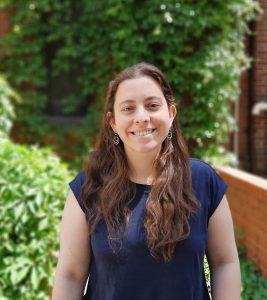
Daniela Ugarte Villalobos
Trainee