

The “model minority myth” holds that certain ethnic groups — for example, Asian Americans — are well educated, hard working, prosperous and healthy. But in a recent study of the life expectancy of Asian Americans, U of T researchers and their collaborators have shown that the myth is just that — a myth.
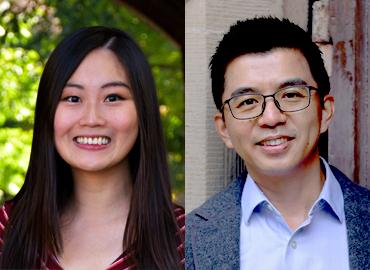
“In our study, we found that the increase in life expectancy of Asian Americans compared to non-Hispanic white Americans has either slowed or reversed between 2000 and 2022,” says Professor Hui Zheng, a demographer and social epidemiologist in the Department of Sociology in the Faculty of Arts & Science and lead author of the study, published in The Journals of Gerontology, Series B: Psychological Sciences and Social Sciences.
“The longstanding mortality advantage of Asian Americans compared to non-Hispanic white Americans has actually declined during the early 21st century,” says Zheng. “This was really surprising to us.”
The researchers conducted a comprehensive analysis of life expectancy as measured in years-of-life-lost (YLL) — the years of potential life less than the average life expectancy. They looked at data collected from 2000 to 2022 for 25 to 84 year-olds in the six largest Asian ethnic subgroups in the U.S.: Chinese, Indian, Filipino, Vietnamese, Korean and Japanese.
The study found that amongst individuals with BAs, life expectancy increased by 1.11 years for white males but decreased by 0.17 years for Asian American males. And, the life expectancy of white women increased by 0.89 years compared to a much smaller increase of .004 years for Asian American women.
At the same time, the analysis revealed significant heterogeneity, i.e. diversity, in mortality trends across six Asian ethnic groups.
“For example, since the turn of the century, Indian and Korean Americans experienced an increase in years-of-life-lost; in other words, a decrease in life expectancy,” says Leafia Ye, an assistant professor of international migration and aging in the Department of Sociology and a co-author of the study. “This stands in contrast to Japanese and Chinese Americans, who have generally experienced an increase in life expectancy.”
The study also describes the complex variations amongst Asian Americans in socioeconomic status, health behaviors, racialized experiences and country of origin that belie homogeneity within the group and prevent a true understanding of the health of subgroups.
As the researchers point out, ignoring the failings of the model minority myth and its inherent suggestion of homogeneity can have serious ramifications.
“Because of this myth, academia has paid little attention to Asian Americans’ health trends, operating under the assumption that they’re doing fine,” says Zheng. “Unsurprisingly, only a limited number of studies have examined their health outcomes.
“Also, analyses that ignore this heterogeneity can result in misleading conclusions and conceal the vulnerabilities of certain subgroups,” says Zheng.
“For example, the two largest Asian American ethnic groups, Chinese and Indian Americans, have divergent trends. If we grouped them together, this could lead to misguided health policy. Effective public health policies must therefore account for this heterogeneity and adopt more targeted interventions.”
The study also revealed that college-educated Asian Americans experienced less favorable mortality trends than their white counterparts. This goes against the expectation that better education leads to better jobs and, thus, a healthier, longer life.
“This puzzle may reflect labour market discrimination,” says Zheng. “It may be that discrimination is limiting the extent to which Asian Americans can translate educational advantages into occupational and income gains. Or, it could be prolonged exposure to discrimination that’s acting as a chronic stressor.”
For Zheng, Ye and their collaborators, the next step is to gain a more detailed understanding of the mechanisms at play behind this heterogeneity — whether it is related to discrimination, or a person’s country of origin and the nutritional conditions there.
“Asian Americans are the fastest-growing racial and ethnic group in the United States, with their population more than doubling between 2000 and 2023,” says Zheng.
“As they become an increasingly significant part of the nation, understanding Asian Americans’ health trends is crucial not only for their own well-being but also for accurately assessing overall population health in the U.S.”